Fish & Sea
Acarajé – bean cakes with vatapá filling
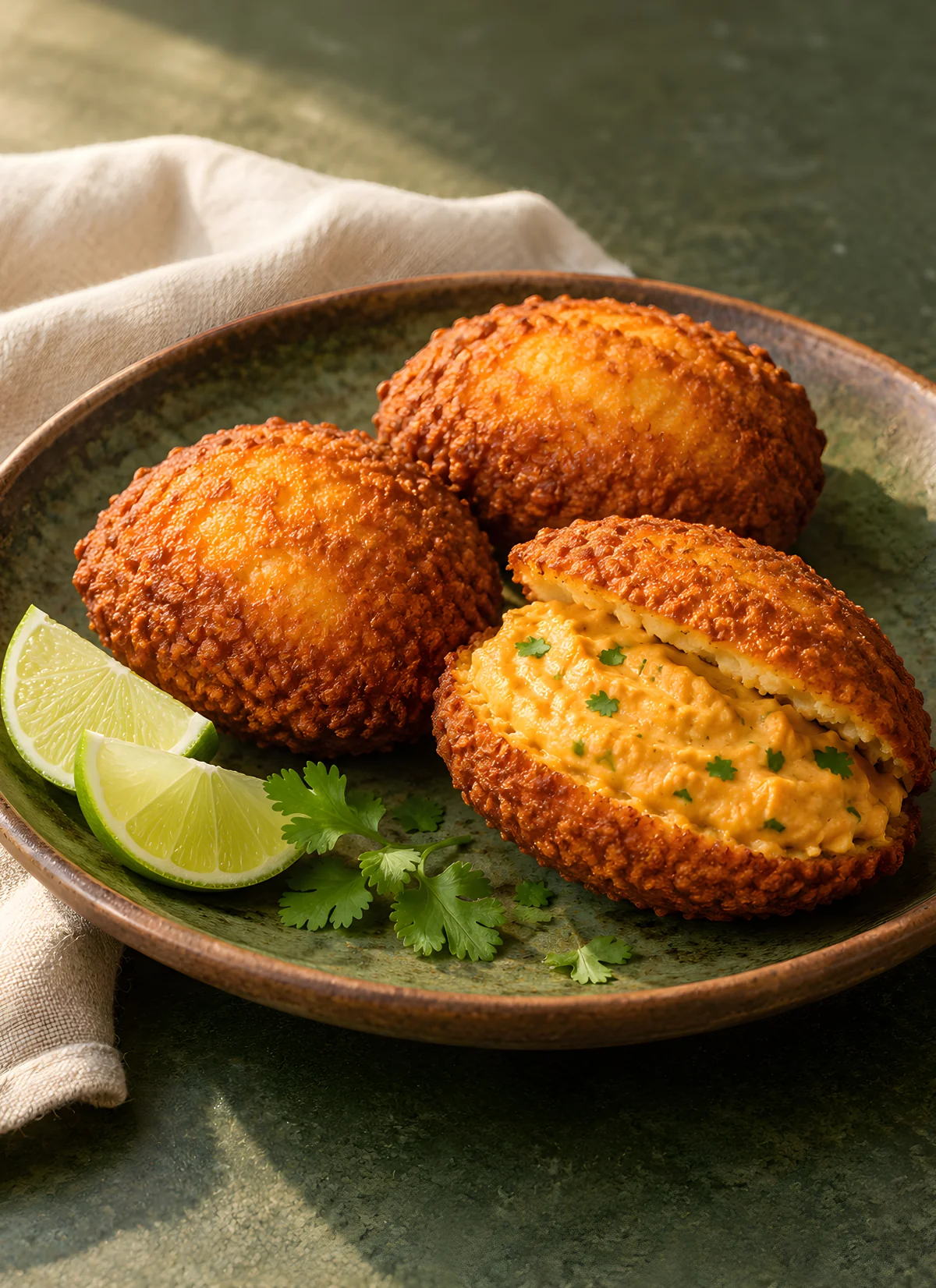
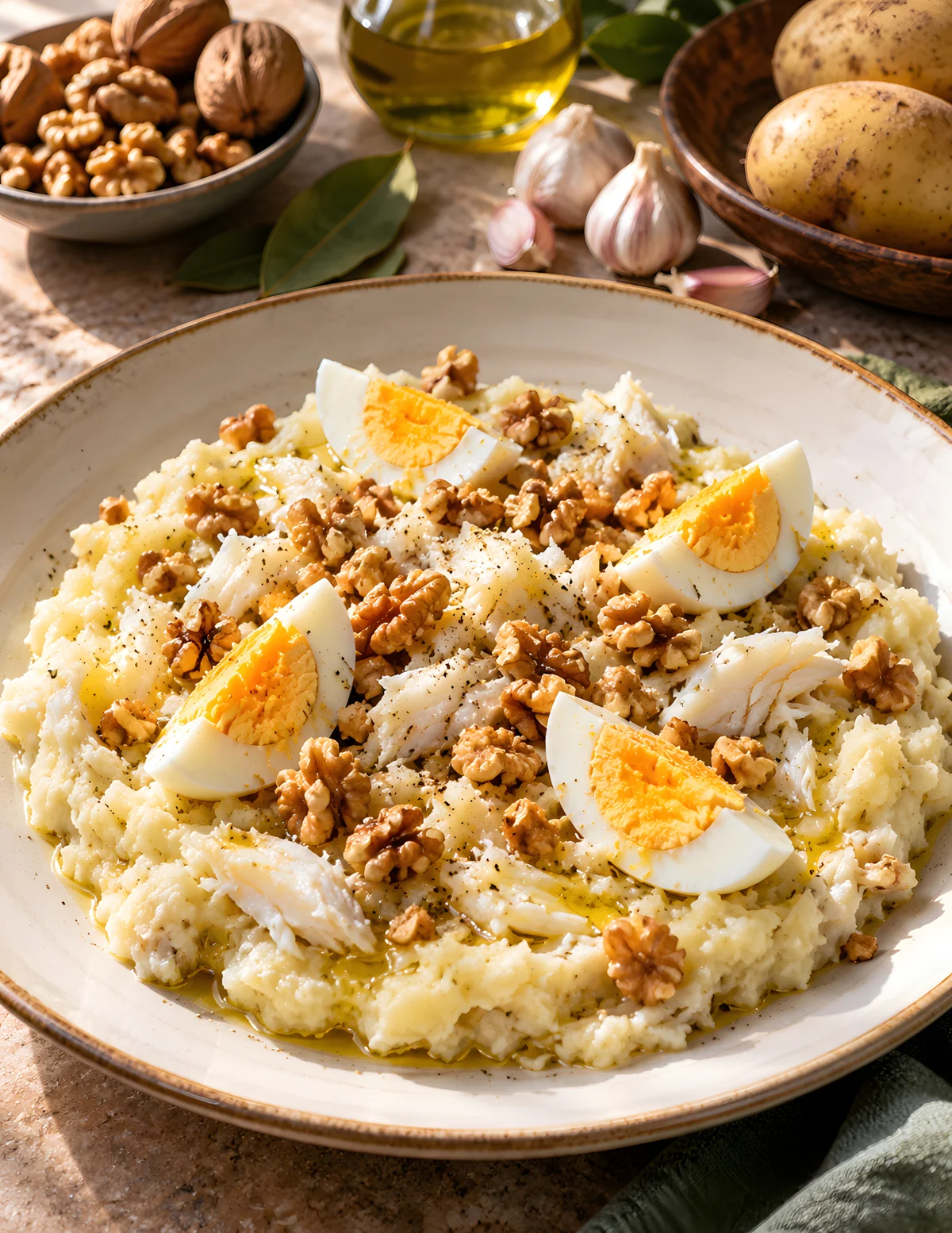
AI-generated serving image
This image was created with the help of artificial intelligence and serves as visual inspiration or a serving suggestion. The actual result may vary depending on the ingredients, quantities and preparation used.
Bahian street food classic in a detailed house version.
Timing
- Preparation: 70 min.
- Cooking/Baking: approx. 45-60 minutes including filling and several batches of frying
- Rest/Cool: Soak beans for 8-12 hours
Estimated nutrition
per serving · Calculated for 5 servings.
- Energy
- ≈ 680 kcal
- Protein
- ≈ 26.7 g
- Carbohydrates
- ≈ 61 g
- Fat
- ≈ 33.3 g
The nutrition values are estimates based on the ingredients and quantities used. Actual values may vary depending on the product, portion size and preparation.
Calculation basis
Item weights and household measures are estimated. Unless specified: milk with 1.5% fat, cream with 30% fat and Gouda cheese. Optional ingredients, small amounts of seasoning and separately listed side dishes are excluded. For imprecise entries, the amounts below and comparable reference products are assumed. For alternatives, the first listed ingredient is used. Cooking losses have not been measured.
Calculated estimate using the reference foods below. Substitute products, item weights and consumed fractions are assumptions. Ordinary cooking oil and marinades are counted in full; frying oil, coatings, bones and whole roasts use the stated factors. The higher serving count is used for ranges. Actual product values and cooking losses have not been measured. Varying only the listed quantity assumptions gives 645–755 kcal per unit stated above. This is neither a measured range nor a statistical confidence interval.
Cowpeas, blackeyes beans, uncooked
Ingredient amounts for the whole recipe; linked reference names retain the source language
- 400 g dried black-eyed peas (feijão-fradinho), peeled if possible · ≈ 400 g · Assumed quantity / reference product
Cowpeas, blackeyes beans, uncooked (MT:06.191) - 1 onion (120 g) for dough · ≈ 120 g · Assumed quantity / reference product
Speisezwiebel roh (G480100) - 700 ml frying oil, including up to 250 ml of suitable dendê oil if possible · ≈ 40 g · Absorbed frying oil; the remaining oil bath is excluded
Rapsöl/Rüböl (Q180000)
Varied quantity range: 20–80 g - 120 g stale white bread without crust · ≈ 120 g · Assumed quantity / reference product
Weizenbrot/Weißbrot (B311000) - 300 ml coconut milk · ≈ 300 g · Assumed quantity / reference product
Kokosmilch/Kokosnussmilch (H154000) - 70 g unsalted cashews · ≈ 70 g · Assumed quantity / reference product
Cashewkern (H170100) - 1 onion (100 g) for filling · ≈ 100 g · Assumed quantity / reference product
Speisezwiebel roh (G480100) - 2 cloves of garlic · ≈ 6 g · Assumed item weight × count; total amount
Knoblauch roh (G490100) - 2 tomatoes (250 g) · ≈ 250 g · Assumed quantity / reference product
Tomate roh (G561100) - 20 ml Dendê oil for filling · ≈ 18.2 g · Assumed quantity / reference product
Palmfett/Palmöl, raffiniert (Q150000) - 1/2 tsp ginger · ≈ 2.5 g · Assumed quantity / reference product
Ingwer/Ingwerwurzel, roh (R211200) - 10 g coriander · ≈ 10 g · Assumed quantity / reference product
Petersilienblatt roh (G250100) - 1 lime · ≈ 25 g · Assumed item weight × count; total amount
Limettensaft (F602600)
Not included in the base calculation
- 6g salt · Salt or small seasoning amount; no salt/micronutrient calculation
- 100 g cooked, peeled shrimp, optional · Optional ingredient or inedible equipment
- Salt and pepper · Salt or small seasoning amount; no salt/micronutrient calculation
Matvaretabellen: Mattilsynet · Santa Maria
Food data: Max Rubner-Institut, BLS 4.0 (2025), CC BY 4.0. Calculated and rounded for this recipe. BLS 4.0 · CC BY 4.0
Ingredients
- 400 g dried black-eyed peas (feijão-fradinho), peeled if possible
- 1 onion (120 g) for dough
- 6g salt
- 700 ml frying oil, including up to 250 ml of suitable dendê oil if possible
- 120 g stale white bread without crust
- 300 ml coconut milk
- 70 g unsalted cashews
- 100 g cooked, peeled shrimp, optional
- 1 onion (100 g) for filling
- 2 cloves of garlic
- 2 tomatoes (250 g)
- 20 ml Dendê oil for filling
- 1/2 tsp ginger
- 10 g coriander
- 1 lime
- Salt and pepper
Instructions
- Soak beans in plenty of cold water overnight. If unpeeled, remove most of the skin by rubbing and washing several times; drain thoroughly.
- Grind the beans with the dough-onion and salt in a food processor to as fine and thick a mass as possible. Beat vigorously in a bowl to incorporate air, 5-8 minutes; If necessary, add water only a tablespoon at a time.
- For Vatapá, soak bread in coconut milk, puree finely with cashews, onion, garlic, tomatoes and ginger. Cook in 20 ml dendê oil over low heat for 12-15 minutes, stirring until thick and completely hot; taste.
- Pour frying oil into a high pot no more than halfway and heat to 170–175 °C. Using two spoons, form the bean mixture into ten oval portions and fry in small batches for about 7-10 minutes each until golden brown and completely cooked through.
- Drain the bean cakes, carefully cut them open on the side, fill them with warm vatapá, optionally already cooked shrimp and some coriander.
- Serve immediately with a few drops of lime juice; Do not serve with raw shrimp or uncooked bean seeds.
Tips
- Well-shelled beans and well-beaten mixture are crucial; the filling should remain stable.
- Food Safety: Acarajé is part of Afro-Brazilian religious and culinary traditions. Bean mixture must not be raw inside. Allergens: Cashew nuts and possibly crustaceans (shrimp). [BR03]
- Technology: Germany: Dried black-eyed peas in the Afroshop, cashews as an ingredient available here; Dendê is culturally and tastefully central. This reduced filling is not a full classic combination of vatapá, caruru and shrimp.